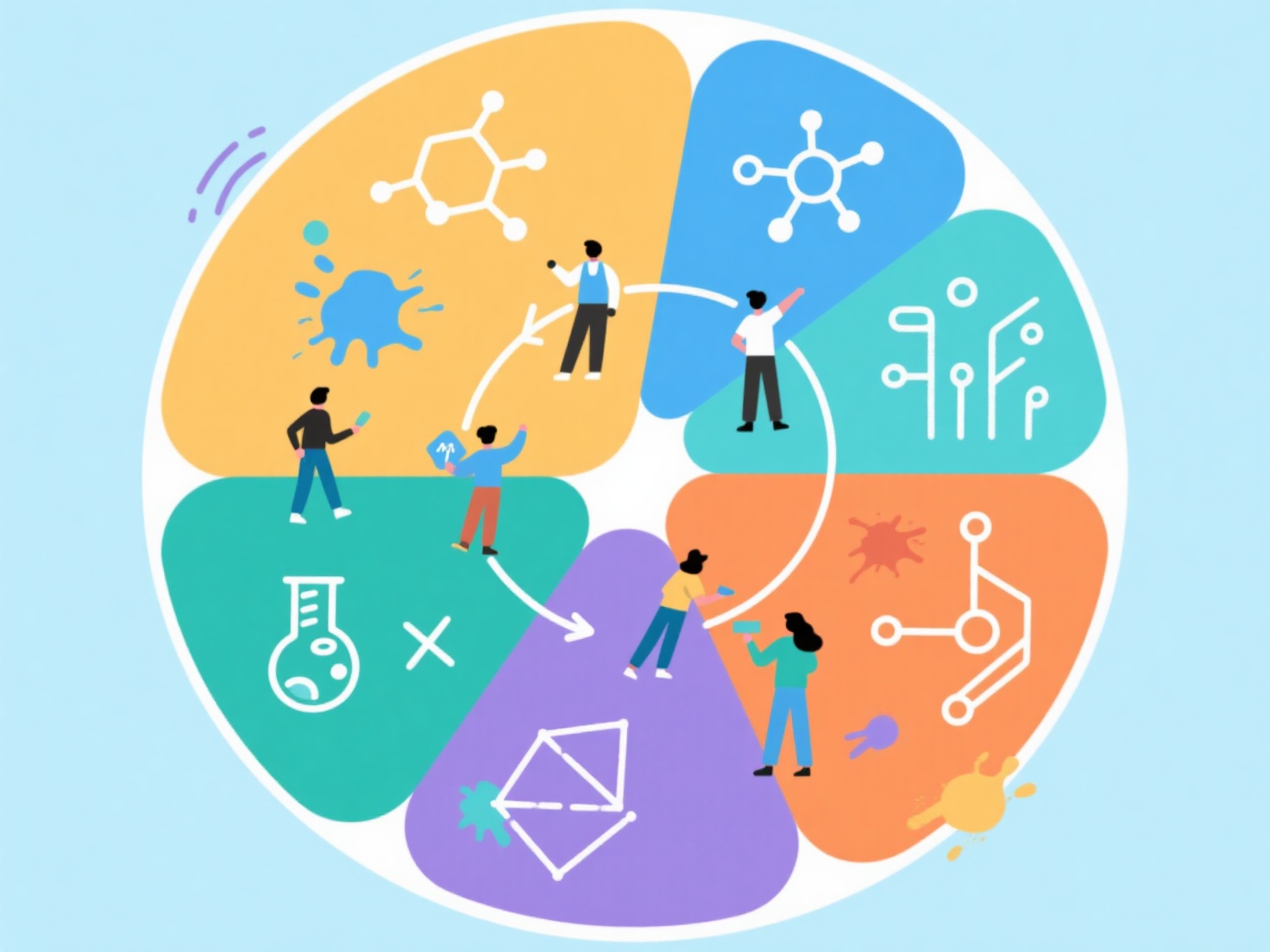
To create interdisciplinary areas for students, educators must identify overlapping concepts between distinct academic fields, design project-based curricula that require cross-disciplinary problem solving, and foster collaborative environments.
Building a successful interdisciplinary program bridges the gap between traditional academic silos, allowing students to tackle complex, real-world challenges. Whether you are designing a new university module, guiding graduate researchers, or setting up a student-led research group, following a structured approach ensures the cross-disciplinary experience is both rigorous and engaging.
1. Identify Meaningful Intersections
Start by mapping out natural synergies between different subjects, such as combining data science with sociology or biology with engineering. The goal is to find areas where the methods of one field can solve the problems of another. If your students are struggling to pinpoint exactly where these subjects overlap, WisPaper's Idea Discovery feature can help by using agentic AI to analyze their literature and automatically identify viable research gaps between multiple fields.
2. Implement Problem-Based Learning
Interdisciplinary studies thrive on applied learning. Design curricula around complex, open-ended questions that cannot be answered using a single academic lens. For example, asking students to design a sustainable urban space requires knowledge of environmental science, urban planning, economics, and public policy. Project-based assignments naturally force students to integrate diverse academic perspectives.
3. Encourage Team Teaching and Mentorship
A single instructor rarely holds deep expertise in multiple disparate fields. To provide a truly interdisciplinary education, collaborate with faculty members from other departments. Co-teaching a seminar or assembling a diverse academic advisory committee allows students to see how experts from different backgrounds approach the same problem, which models effective collaborative research.
4. Build Diverse Student Cohorts
Learning from peers is just as important as learning from instructors. When forming research teams or project groups, intentionally mix students from different majors or academic backgrounds. A computer science student and a psychology major will approach a topic like artificial intelligence ethics from entirely different, yet highly complementary, angles.
5. Provide Flexible Research Resources
Traditional academic databases often restrict search results to specific disciplines, which can hinder cross-disciplinary literature reviews. Ensure your students have access to comprehensive academic search engines and libraries that span multiple fields of study. Encourage them to explore journals outside their primary major to build a broader foundational knowledge base.
By breaking down academic silos and focusing on problem-driven learning, you can create dynamic interdisciplinary areas that prepare students to become innovative, adaptable researchers.