
[Survey 2023] AI for Systematic Reviews: From Laborious Manual Screening to Human-in-the-Loop Automation
Artificial intelligence to automate the systematic review of scientific literature
This paper presents a comprehensive survey of Artificial Intelligence (AI) techniques used to automate Systematic Literature Reviews (SLRs) over the last 15 years. It identifies 34 primary studies, highlighting that while Machine Learning (ML) is widely applied for paper selection, newer areas like Natural Language Processing (NLP) and Deep Learning are emerging to support other stages of the review process.
TL;DR
Systematic Literature Reviews (SLRs) are the bedrock of evidence-based research but are notoriously exhausting to produce. This 15-year retrospective analysis reveals that while AI (specifically SVMs and Active Learning) has mastered the "art of filtering" papers, the "art of synthesis and reporting" remains a frontier. For practitioners, tools like FAST2 and Abstrackr are ready for use, potentially cutting screening time by over 80%.
Background: The Scalability Crisis in Science
The volume of scientific output is exploding. In medicine and computing alone, thousands of reviews are published annually, yet the manual process of "searching, screening, and extracting" remains largely unchanged since the early 2000s. The authors of this paper argue that AI is no longer optional; it is a necessity to maintain the rigorous standards of SLRs without succumbing to the "costly and error-prone" nature of human exhaustion.
Problem & Motivation: Why is SLR Automation Hard?
Most traditional automation focuses on Paper Selection. The challenge isn't just "finding" a paper, but dealing with:
- Class Imbalance: In a pool of 10,000 papers, perhaps only 50 are relevant.
- Terminology Mapping: Different fields use different "black-box" jargon for the same concepts.
- Trust: Researchers are hesitant to let an algorithm decide what to exclude (the "False Negative" fear).
Methodology: The Landscape of AI in SLRs
The researchers mapped AI techniques across the three standard SLR phases:
1. The Planning Phase (Unsupervised Learning)
Techniques like Clustering (e.g., Lingo3G) are used to "map" a field before the review officially starts, helping researchers identify sub-topics without prior labels.
2. The Conducting Phase (The ML Powerhouse)
This is where 59% of research happens. The paper identifies three main paradigms:
- Supervised Learning: Using Support Vector Machines (SVM) and Naive Bayes to classify papers based on Title and Abstract.
- Active Learning (The SOTA): Tools like Abstrackr and FASTREAD use a "Human-as-an-Oracle" approach. The AI asks the human to label most uncertain papers first, rapidly improving its accuracy.
- Ontologies: Specifically used in medical reviews to map unstructured text to structured knowledge (PICO framework).
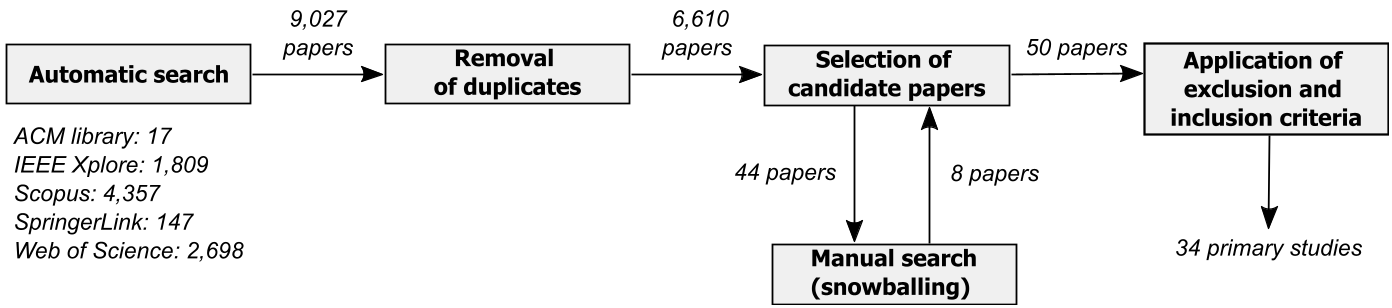 Figure 1: The systematic workflow followed by the authors to conduct this survey.
Key Results: Performance and Efficiency
The "Gold Standard" for success in this field is Workload Reduction.
- FAST2 vs. Abstrackr: In real-world tests, FAST2 found 95% of relevant studies after a human had screened less than 10% of the total results.
- Binary vs. Ranking: Modern AI is moving away from "Yes/No" decisions to "Ranked Probabilities," allowing humans to stop screening once the probability of finding a new paper drops below a threshold.
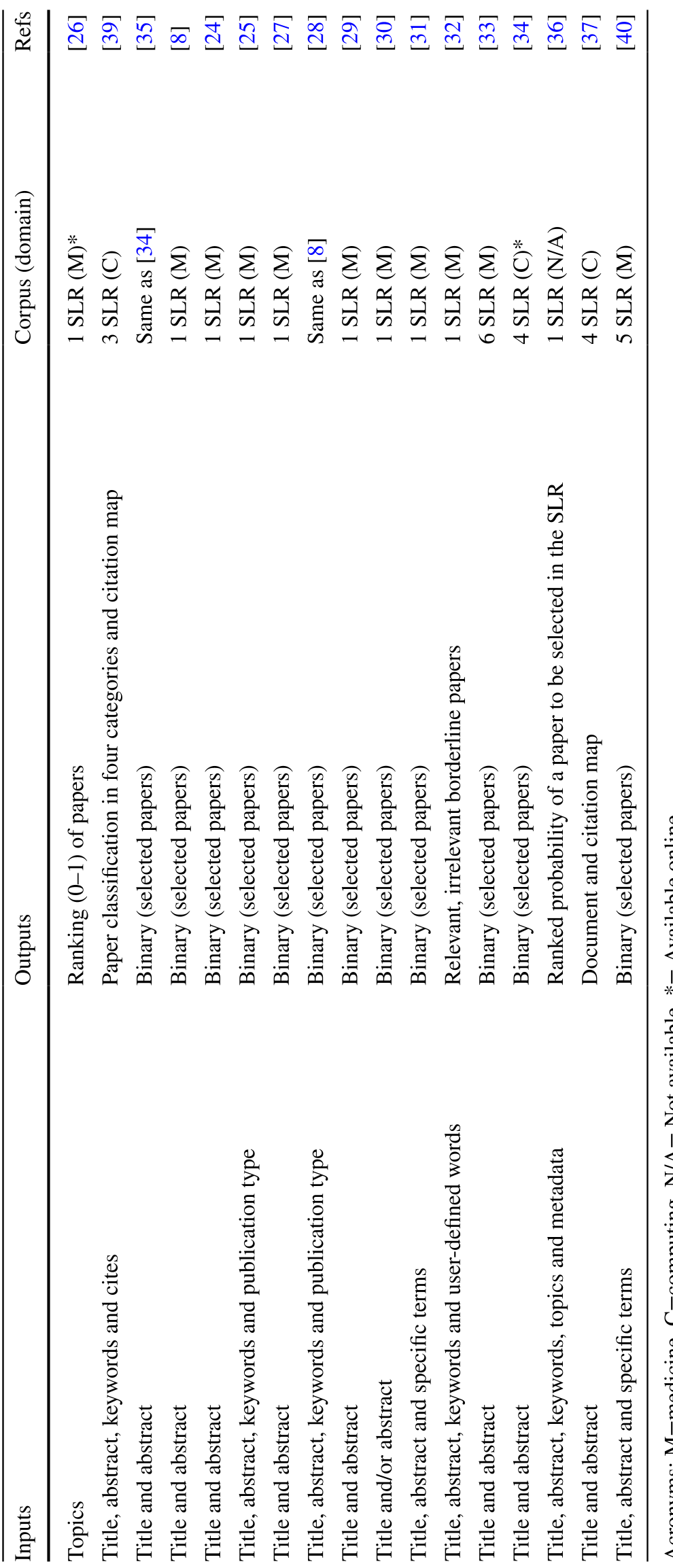 Table 1: Comparison of AI inputs/outputs and corpus domains for paper selection methods.
Critical Analysis & Future Outlook
Is the Human Still Necessary?
The authors emphasize RQ3 (Human Involvement): 68% of current methods are "fully automated" but often lack the holistic view necessary for true scientific discovery. The trend is moving toward Semi-Automated systems where AI acts as an "intelligent assistant" rather than a replacement.
The "Reporting" Gap
We are good at filtering, but poor at writing. The "Reporting Phase" is the most neglected. The paper notes early attempts using LSTMs and BioBERT to generate summaries, but we are still far from an AI that can write a nuanced "Discussion" or "Future Trends" section.
Conclusion (Takeaways)
- Efficiency: AI can reduce the screening burden by 60-80%.
- Lack of Integration: Most tools are "one-trick ponies" focusing only on screening. We need end-to-end platforms.
- Explainability: Future AI must tell us why it excluded a paper (e.g., "Excluded due to lack of empirical data") to build researcher trust.
Final Thought: If you are starting an SLR today, not using an Active Learning tool like FAST2 is effectively wasting hundreds of hours of human labor.