
Gamification and Online Consumer Decisions: Why the Game is Far From Over
Decision Support Systems
This paper presents a systematic literature review and bibliometric analysis of 257 academic papers to determine the impact of gamification on online consumer decisions. Using the SciMAT tool and PRISMA methodology, the authors identify that 82.8% of empirical studies confirm gamification's positive influence on consumer engagement and purchasing behavior.
TL;DR
Is gamification just a marketing fad, or a fundamental shift in how we shop? This systematic review of 257 papers reveals that gamification significantly boosts consumer engagement and decisions in over 80% of empirical cases. By moving beyond simple "points for prizes" and tapping into psychological needs for challenge and social connection, brands are transforming the "boring" act of purchasing into a leisure activity.
Context & Motivation: Beyond the Loyalty Card
For decades, "gamification" in retail was synonymous with the punch-card: buy ten coffees, get one free. However, in an era where consumers check their smartphones 80 times a day, these static rewards are losing their edge. The authors of this study argue that existing methods have neglected the deeper mechanisms—like Challenge, Social Influence, and Meaning—that actually shape human behavior. The goal of this research is to move past the "What" of gamification and solve the "Why" and "How" of its effectiveness in digital commerce.
Methodology: Mapping the Intellectual Landscape
The researchers employed a rigorous bibliometric analysis using SciMAT to visualize the "strategic map" of the field.
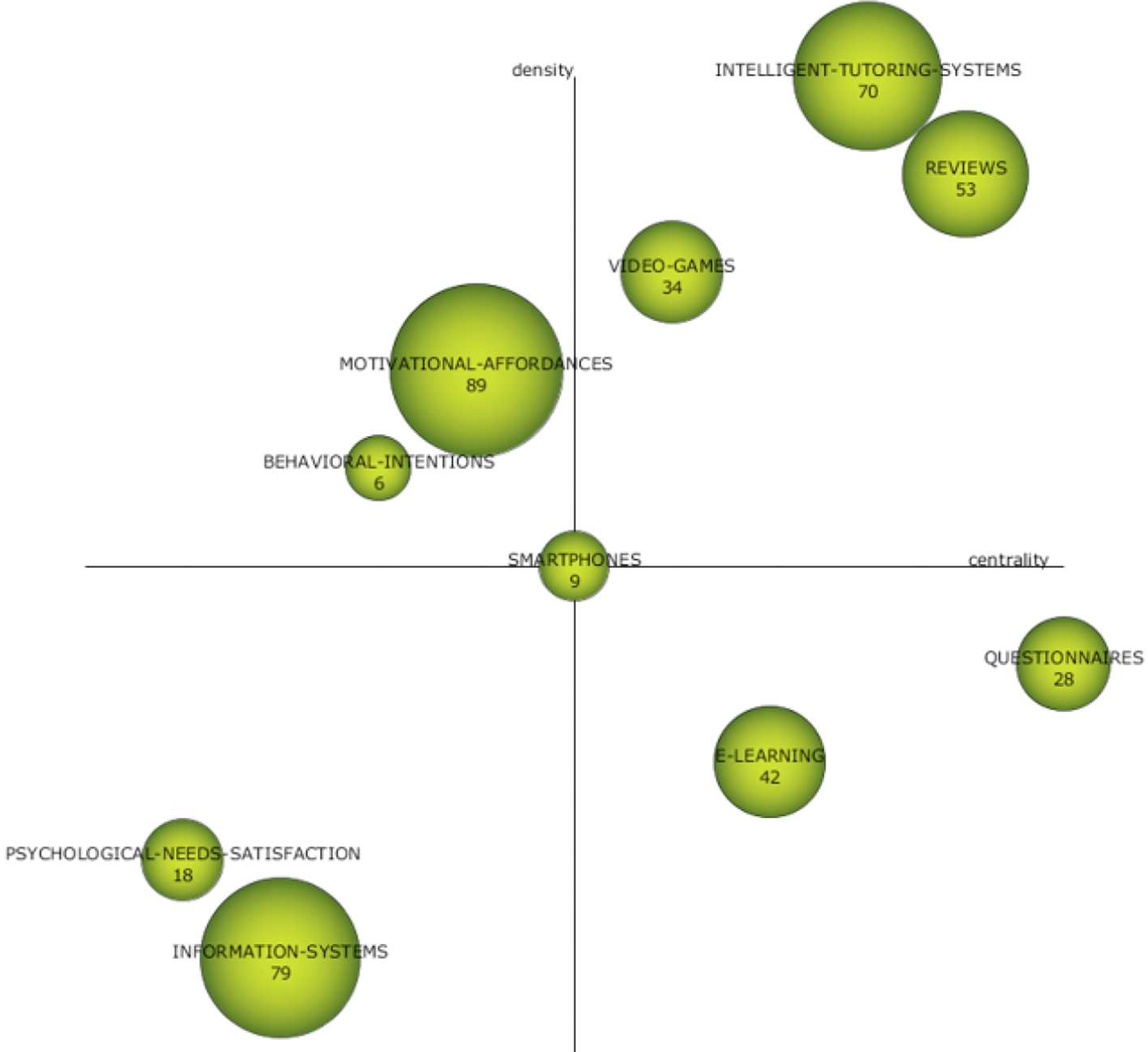 Figure 1: The SciMAT strategic diagram showing motor themes (Video Games, Reviews) and emerging themes (Psychological Need Satisfaction).
They found that while "Video Games" and "E-learning" are well-saturated topics, the "Psychological need for satisfaction" remains an emerging theme that requires deeper investigation to understand why users truly engage with interactive platforms.
The Core Mechanism: Why Does It Work?
The paper identifies two primary pillars of gamification theory:
- Self-Determination Theory (SDT): This suggests that humans are driven by three innate needs: Competence (mastering a task), Autonomy (having choice), and Relatedness (connecting with others). Gamification works when it satisfies these, not just when it gives out points.
- Technology Acceptance Model (TAM): Users engage with gamified apps if they are perceived as both useful and easy to use.
Elements vs. Mechanisms
The study clarifies a common confusion in the industry:
- Elements (The 'What'): Points, Badges, Leaderboards, Avatars.
- Mechanisms (The 'How'): Rewards, Challenges, Competition, Cooperation.
For example, a badge is just an element, but the mechanism it triggers is Social Influence—allowing users to compare themselves to peers.
Experimental Evidence: Does It Actually Matter?
The authors reviewed 36 core empirical papers. The results are overwhelmingly positive, yet nuanced.
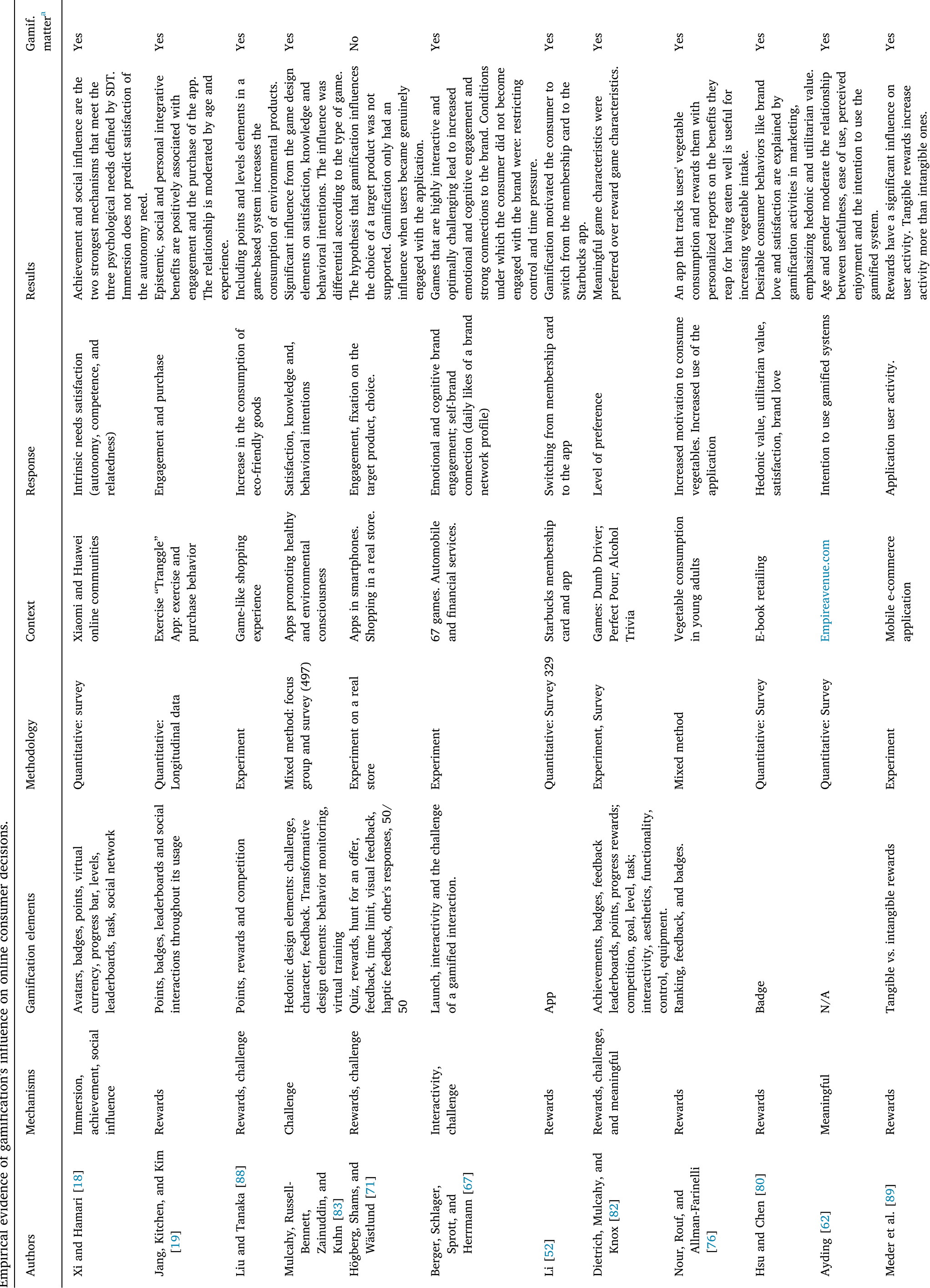 Table 4: Highlights of gamification's influence on consumer choices, from Starbucks app adoption to eco-friendly shopping.
Key Findings:
- Engagement is a prerequisite: Gamification doesn't directly cause a purchase; it causes engagement, which then leads to a purchase. If the user doesn't find the "game" intrinsically interesting, the impact on sales is zero.
- Reward vs. Meaning: "Reward-based" gamification (extrinsic) works for short-term spikes but can fail once the rewards stop. "Meaningful" gamification (intrinsic) leads to long-term behavioral change.
- Demographics Matter: Factors like age and experience moderate how well these systems work. Millennials, for instance, are more susceptible to "Flow" and "Enjoyment" mechanisms than older generations.
Critical Insight & Future Outlook
The "Game Over" in the title is rhetorical—the game is just beginning. However, the authors warn of "Reward Fatigue." If every app uses the same points system, the value of those points diminishes.
The Future Agenda:
- Thematic: We need to move toward "Interactivity" and "Social Influence."
- Methodological: More longitudinal studies are needed. Does a consumer still care about their "Superhost" badge after three years?
- Theoretical: We must integrate more sociology to understand how virtual communities impact social consumption.
Conclusion: Gamification is a powerful vehicle for product testing and consumer engagement, but it must be designed with human psychology at the center, rather than just as a layer of "funware" over a mediocre product.