
The Rise of the LLM-Brain: A Deep Dive into Intelligent Agent Frameworks
Exploring large language model based intelligent agents: Definitions, methods, and prospects
This paper provides a comprehensive survey of LLM-based intelligent agents, categorizing them into single-agent and multi-agent systems (MAS). It defines a foundational framework consisting of Planning, Memory, Rethink, and Action components, while highlighting how LLMs serve as the "brain" to achieve SOTA generalization across diverse domains like software engineering and social sciences.
TL;DR
The transition from static Large Language Models (LLMs) to Autonomous Intelligent Agents is the most significant leap toward AGI in recent years. Instead of just "predicting the next token," LLM-based agents use the model as a symbolic reasoning engine (the "brain") to plan, remember, and act within complex environments. This survey outlines the framework that defines how modern systems like AutoGPT and Voyager operate.
Why LLMs Alone Aren't Enough
While GPT-4 is impressive, it is essentially "trapped" in a text box. It suffers from:
- Context Length Bottlenecks: Forgetting earlier parts of a conversation.
- Knowledge Stagnation: Information is frozen at the time of training.
- Lack of Agency: It cannot click a button, search the web, or run code without an external wrapper.
The "Agent" paradigm solves this by wrapping the LLM in a loop of perception and action, allowing it to interact with the real world or digital environments.
The Core Architecture: The Framework
The paper formalizes the single-agent architecture into five critical pillars:
- Planning (The Strategy): Utilizing techniques like Chain-of-Thought (CoT) and Tree of Thoughts (ToT) to break down high-level objectives into actionable sub-tasks.
- Memory (The Database): Moving beyond short-term context by using Vector Databases (Long-term memory) to retrieve relevant past experiences via RAG (Retrieval-Augmented Generation).
- Rethink (The Introspection): Agents like Reflexion look at their own failures and "critique" their logic before trying again.
- Action (The Tools): Invoking APIs, Python interpreters, or even robotic arms to manifest decisions.
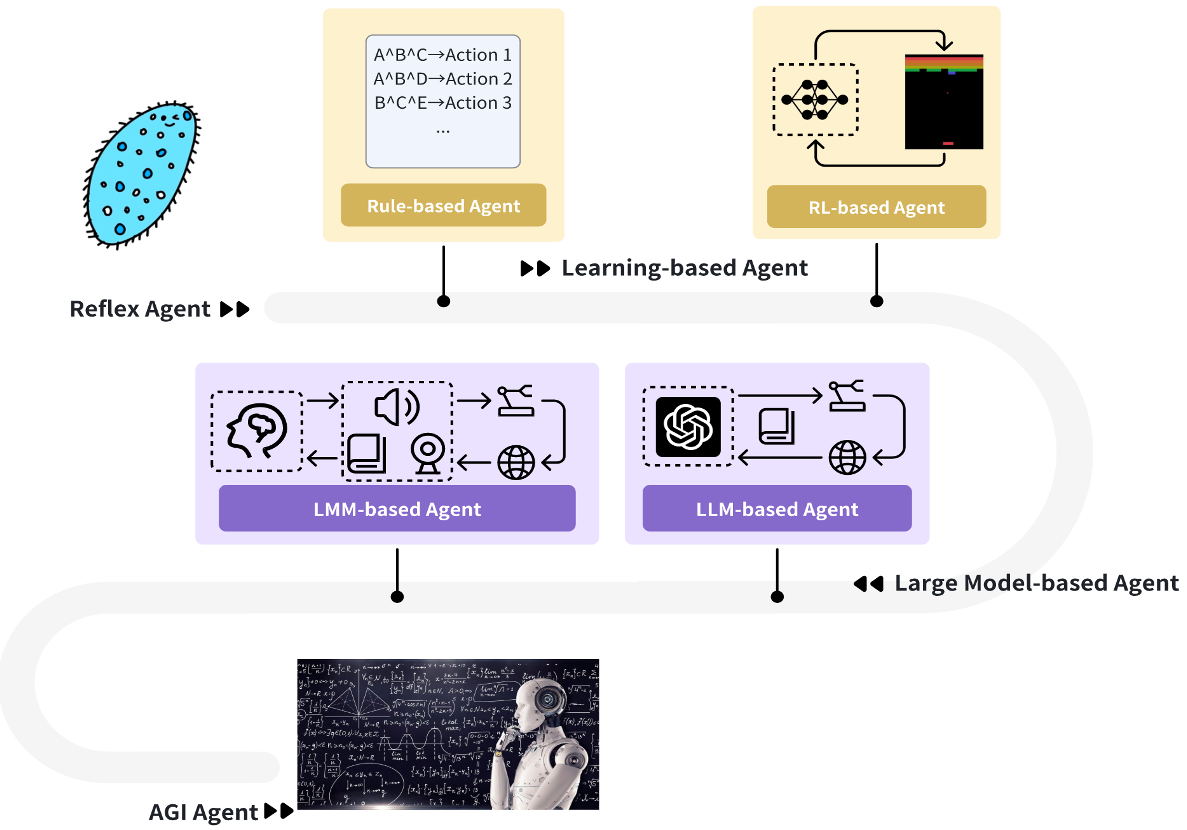 Figure 1: The roadmap from Simple Reflex agents to LLM-powered Learning Agents.
Multi-Agent Systems (MAS): Coordination is King
The true power arises when you have a Society of Mind. The paper distinguishes between:
- Cooperative Agents: Like ChatDev, where agents play roles (CEO, Programmer, Reviewer) to build software.
- Competitive Agents: Engaging in debates to find the most "truthful" or "robust" answer.
- CPDE vs. DPDE: Choosing between Centralized Planning (one "boss" LLM) vs. Decentralized Planning (every agent thinks for itself).
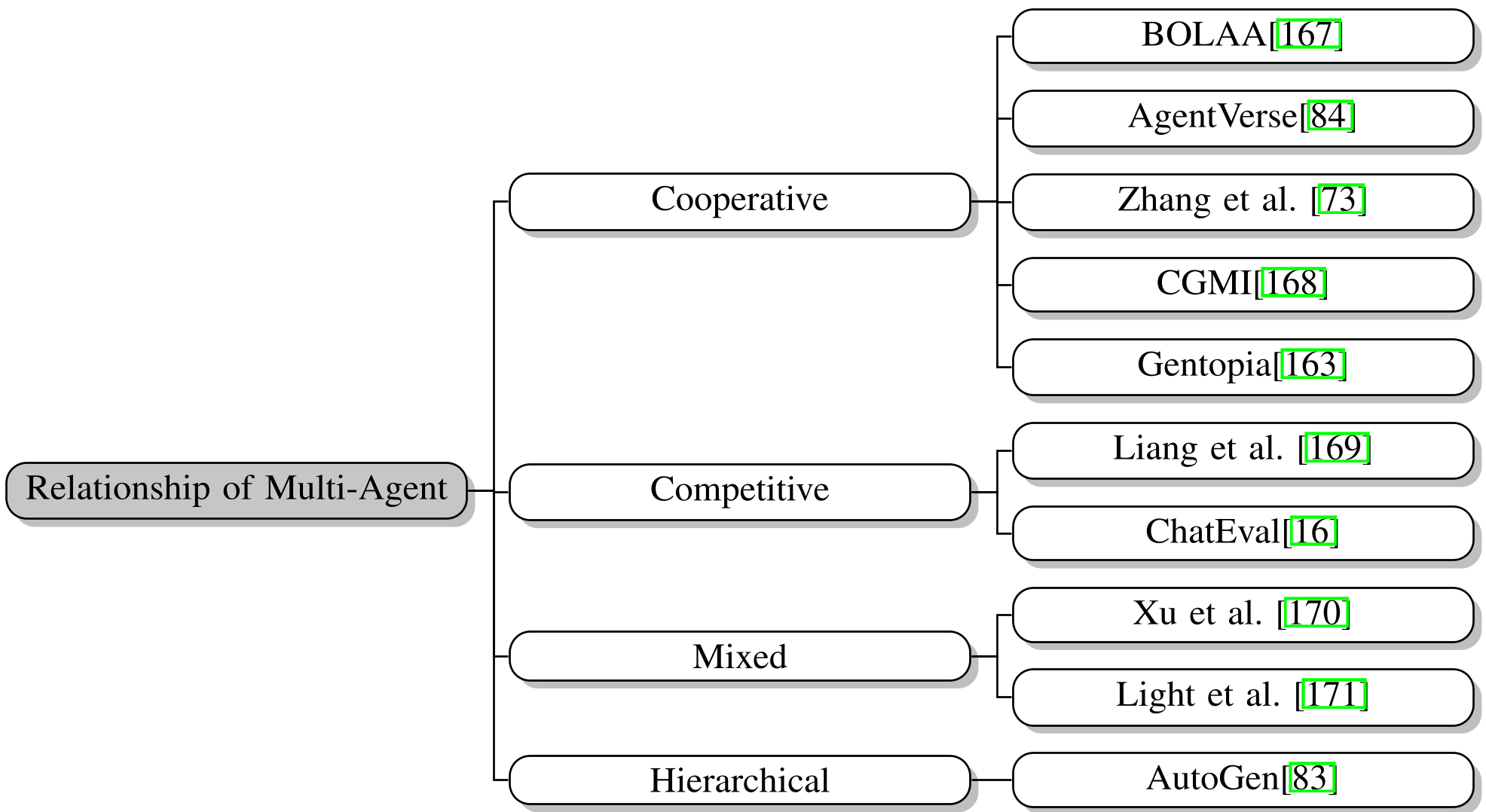 Figure 2: Typology of Multi-Agent Role Coordination.
Performance Benchmarks & SOTA Results
The survey lists critical datasets like ALFWorld (for embodied tasks) and ToolBench (for API usage).
- Key Insight: LLM-agents don't just solve NLP problems; they are conquering Minecraft (Voyager), Chemistry (ChemCrow), and even Legal Judgment (ChatLaw).
- Quantified Impact: Collaborative frameworks like MetaGPT have demonstrated the ability to generate entire codebases with structured SOPs, significantly outperforming single-prompt LLM outputs.
 Table 1: Key datasets used to measure Agentic intelligence.
Critical Analysis & Challenges
Despite the hype, the authors remain grounded. The "Intrinsic Constraints" are real:
- Hallucinations: An agent might confidently call a non-existent API.
- Security (Too much Power): Giving an agent access to your shell or credit card requires "Dynamic Scaling" and strict permission boundaries.
- Inference Costs: The token count for a 10-agent debate can become prohibitively expensive.
Conclusion: A Step Toward AGI
This survey serves as a blueprint for anyone building autonomous systems. By shifting the focus from "scaling parameters" to "optimizing agentic workflows," we are seeing the birth of the Universal Autonomous Agent. The next frontier? Multimodal LMM Agents (like GPT-4V) that can see the screen they are operating on.