
Targeting the Spliceosome: A New Vulnerability in the RAS-Driven Cancer Fortress
Spliceosome induction is a druggable dependency of RAS-driven senescence and cancer
This study identifies spliceosome induction as a critical, druggable dependency in RAS-driven senescence and cancer. Using proteomic analysis and genetic screens, the authors demonstrate that oncogenic RAS triggers a global upregulation of spliceosome components (such as SF3B1 and RBM39), and targeting these factors with small-molecule inhibitors effectively eliminates RAS-mutant preneoplastic and malignant cells in several cancer models.
Executive Summary
TL;DR: Research published in Nature Communications reveals that oncogenic RAS mutations create a desperate dependency on the cell’s splicing machinery. By upregulating spliceosome components like SF3B1 and RBM39, RAS-driven cells maintain the high transcriptional throughput required for malignancy. Pharmacologically "breaking" this machinery leads to selective apoptosis in cancer cells, providing a fresh therapeutic roadmap for some of the most difficult-to-treat cancers.
Academic Positioning: This work moves beyond traditional signaling inhibition (MAPK/PI3K) to identify a structural/enzymatic dependency. It mirrors the "spliceosome addiction" previously seen in MYC-driven cancers but identifies a unique, post-transcriptional mechanism specific to RAS signaling.
The Problem: The RAS Resistance Paradox
For decades, RAS has been the "Mount Everest" of oncology. Even with the advent of G12C-specific inhibitors, tumors frequently adapt by rewiring their signaling circuits. The core issue is that oncogenic RAS doesn't just push a "proliferate" button; it fundamentally re-engineers the cell's nuclear environment. The authors hypothesized that this re-engineering might create new, hidden weaknesses that do not rely on the RAS protein's shape but on the cell's survival requirements.
Methodology: Mapping the Nuclear Landscape
The team utilized IMR90 ER:RAS cells—a classic model where RAS activity can be precisely toggled with tamoxifen. Through high-resolution mass spectrometry of the nucleus, they found a striking signature: a global surge in spliceosome proteins.
Interestingly, this wasn't happening at the mRNA level. Instead, RAS uses the mTOR pathway to boost the translation of these splicing factors. To find the "weakest links," they performed an arrayed siRNA screen of 189 splicing factors, pinpointing six (including SF3B1 and RBM39) that are essential for RAS-mutant cells but dispensable for healthy ones.
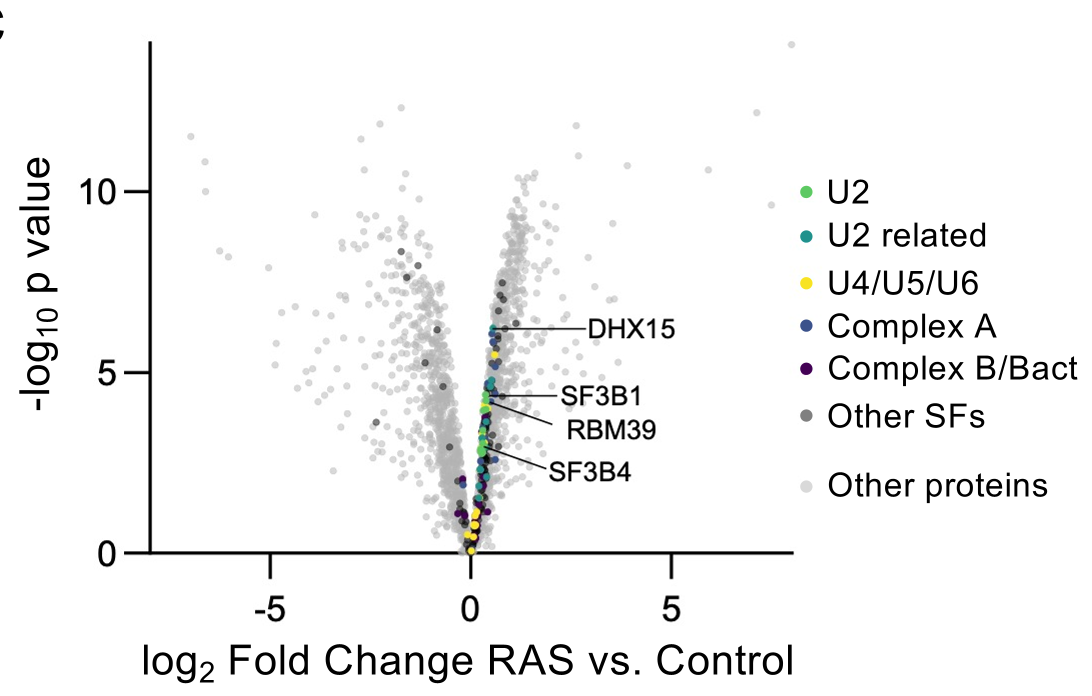 Figure 1: Proteomic analysis reveals that spliceosome components are specifically upregulated in the nuclei of RAS-induced senescent cells compared to controls.
Discovery of the "SPT5" Axis
Why does losing SF3B1 kill RAS cells? The authors discovered that RAS-mutant cells exhibit "transcriptional hyperactivity"—they produce massive amounts of nascent RNA. To handle this, they rely on SPT5 (encoded by SUPT5H), a factor that stabilizes RNA Polymerase II.
When SF3B1 is inhibited, the SUPT5H transcript is incorrectly spliced, leading to a drop in SPT5 protein levels. Without SPT5, the high-octane transcriptional engine of the RAS cell crashes, leading to catastrophic cellular stress and death.
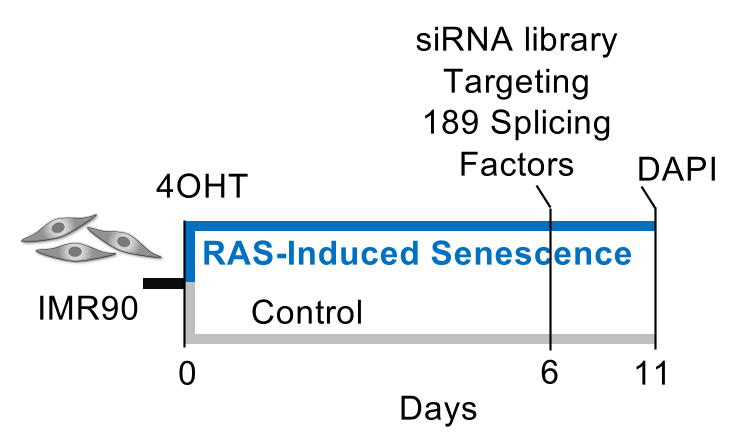 Figure 2: Specific siRNA targets (SF3B1, RBM39) show selective lethality in RAS-positive cells, validated across multiple fibroblastic and colorectal cancer lines.
Experimental Results: Validating the Vulnerability
The researchers tested several "anti-splicing" drugs, including E7107 and the molecular glue Indisulam.
- In Premalignant Models: In mice where RAS was used to initiate liver lesions, these drugs cleared the abnormal cells before they could turn into full-blown cancer.
- In Aggressive Tumors: In a "Kras/p53" double-knockout model of liver cancer (which mimics the severity of human disease), E7107 significantly reduced tumor numbers and liver weight.
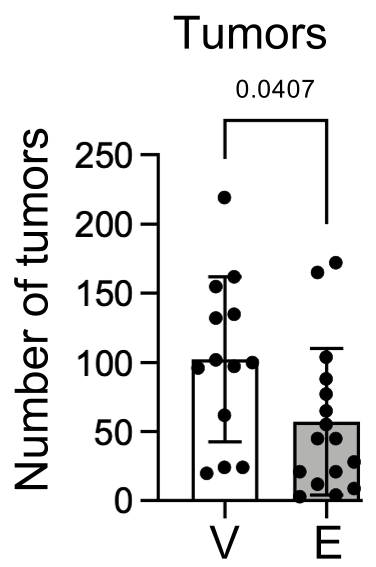 Figure 3: Pharmacological inhibition of the spliceosome via E7107 leads to a substantial reduction in tumor burden in aggressive RAS-driven liver cancer models.
Critical Insight & Future Outlook
Takeaway: This study proves that the spliceosome isn't just a passive worker in the cell; in the context of RAS mutations, it becomes a critical support pillar. By targeting SF3B1 or RBM39, we are essentially "cutting the power" to the transcriptional machinery that oncogenes rely on.
Limitations: While the preclinical results are robust, splicing inhibitors have historically faced toxicity concerns in human trials (e.g., visual disturbances with E7107). The "window" for therapeutic safety must be carefully managed.
The Future: The identification of the SPT5 axis suggests that we might not need to target the whole spliceosome. Future therapies could focus on more specific "downstream" targets or use "molecular glues" like Indisulam to degrade specific splicing factors with higher precision.