
Mobile Spin Qubits: Teleportation and Logic in a Reconfigurable Silicon Processor
Two-qubit logic and teleportation with mobile spin qubits in silicon
The paper demonstrates high-fidelity two-qubit logic (CZ gate) and conditional quantum state teleportation using mobile electron spin qubits in a silicon-based quantum processor. By utilizing "conveyor-mode" shuttling to bring two spins into close proximity, the researchers achieved a two-qubit gate fidelity of 99% and process fidelity for teleportation of 87%.
TL;DR
Researchers at QuTech have bridged a major gap in semiconductor quantum computing by demonstrating that electron spin qubits don't need to stay stationary to interact. By shuttling two electron spins towards each other using "conveyor-mode" transport, they performed a 99% fidelity CZ gate and a 87% fidelity quantum teleportation protocol. This effectively transforms a static 1D array into a dynamic, reconfigurable system.
Background: The Connectivity Bottleneck
Scaling quantum computers is as much about connectivity as it is about qubit count. Most solid-state qubits are "stuck" in place, limited to interacting with their immediate neighbors. To move information across a chip, you usually need a long chain of SWAP gates—which is slow and error-prone.
Taking inspiration from trapped ions (the QCCD architecture), this team asked: What if we move the electrons themselves to a central "interaction zone" to do the logic, and then move them back?
Methodology: Logic on the Move
The device is a 6-quantum-dot array in a Si/SiGe heterostructure. The core "magic" happens via Conveyor-Mode Shuttling. Instead of hopping electrons discretely, they apply phase-shifted sinusoidal signals to gate electrodes, creating a moving potential "bucket" that gently carries the electron spin.
1. The Shuttling-Based CZ Gate
The two-qubit interaction (Exchange Coupling, ) is distance-dependent. By bringing two mobile qubits (Q2 and Q5) toward the center, their wavefunctions begin to overlap, activating the interaction.
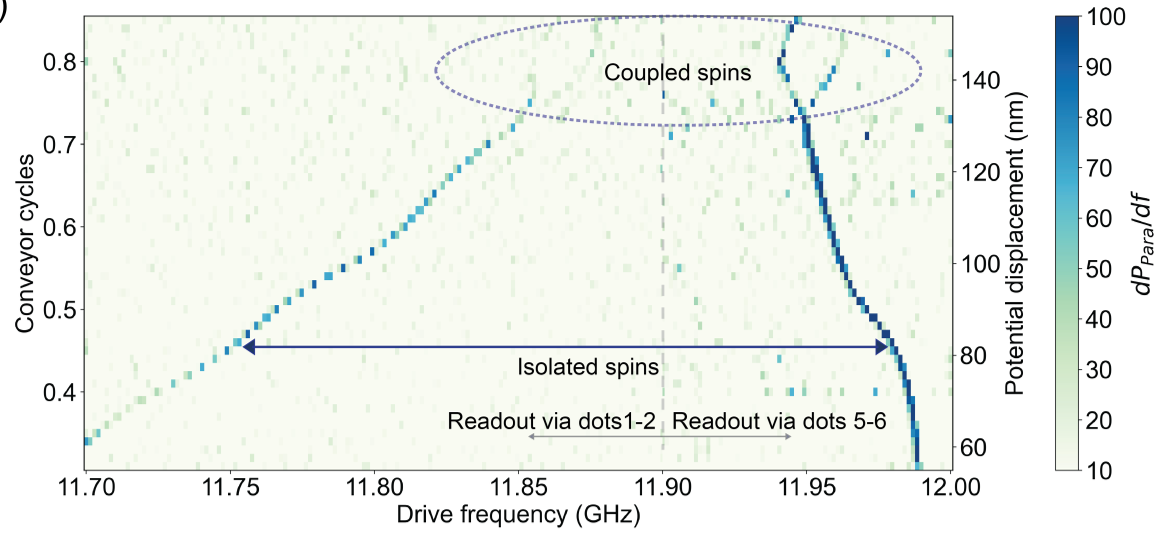 Figure 1: Conceptual architecture showing storage zones and shared interaction conveyor channels.
2. High-Fidelity Performance
The team achieved a CZ gate in just 58 ns. Through Interleaved Randomized Benchmarking (IRB), they measured a gate fidelity of 98.86%.
A fascinating discovery was the "Merged" potential regime. Usually, increases exponentially as dots get closer. However, by using elongated potentials, the exchange interaction saturated (plateaued). This regime showed improved dephasing times (), suggesting a path to gates that are less sensitive to electrical noise.
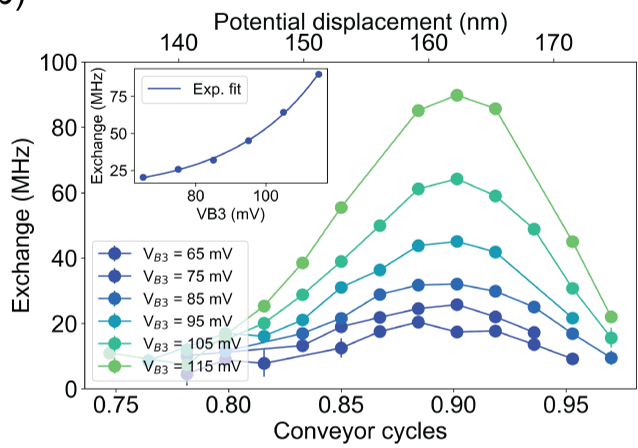 Figure 2: Exchange coupling (J) and dephasing times vs. displacement. Note the saturation in the merged configuration.
Achievement: Quantum Teleportation
To prove the utility of mobile qubits for non-local tasks, they implemented quantum state teleportation.
- Entanglement: Q2 and Q5 were shuttled together to create a Bell state and then separated.
- Measurement: A Bell-state measurement was performed on Q5 and stationary Q6.
- Teleportation: This transferred the unknown quantum state of Q6 to the distant Q2.
The 86.7% process fidelity is well above the 66.7% classical threshold, proving that mobile spins can maintain their quantum "spookiness" even after being moved across multiple dot sites.
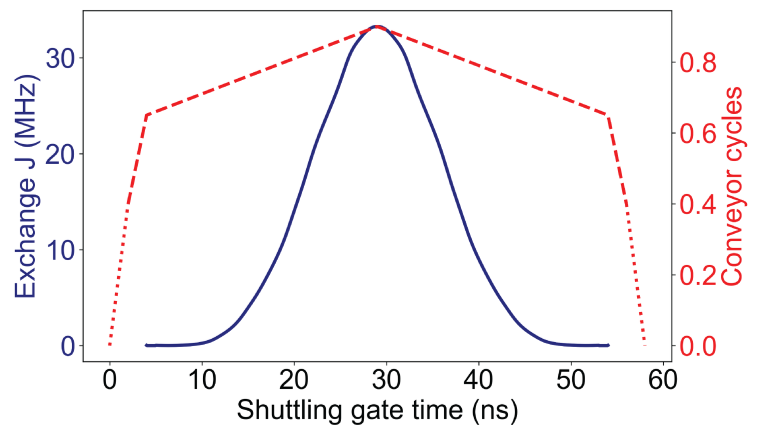 Figure 3: Interleaved Randomized Benchmarking (IRB) results showcasing the 98.86% CZ gate fidelity.
Critical Insight & Future Outlook
Why is this a big deal? Because it solves the "sparse-to-dense" problem. You can have qubits stored in "quiet" sparse regions and bring them into "busy" dense regions only for logic. This reduces heat, cross-talk, and wiring complexity.
Limitations: The current teleportation is conditional (post-selected) because the readout couldn't distinguish all four Bell states in real-time. The next step is "deterministic" teleportation using fast, non-demolition readout and real-time feed-forward control.
Conclusion: Shuttling is no longer just a way to move data; it’s a high-performance tool for universal quantum logic. This work brings solid-state processors one step closer to the flexible, "all-to-all" connectivity seen in atomic systems.