
XB5748ISZ11: High-Integration Safety Sentinel for One-Cell Lithium Batteries
XB5748ISZ11-REV0.1
The XB5748ISZ11 is a high-integration IC designed for one-cell Lithium-ion/Polymer battery protection. It integrates advanced power MOSFETs (53mΩ RSS(ON)), high-accuracy voltage detection, and delay circuits into an ultra-small SOT23-5 package to ensure safe battery operation.
TL;DR
The XB5748ISZ11 is a specialized lithium-ion/polymer battery protection IC that consolidates advanced power MOSFETs and precision detection circuitry into a single SOT23-5 package. It solves the space constraints of modern electronics while offering mandatory safety features like overcharge, over-discharge, overcurrent, and 0V charging prohibition with a low 53mΩ conduction resistance.
Background & Motivation: The Shrinking PCB
As smartphones and wearables become thinner, the "Battery Protection Circuit Module" (PCM) faces a physical paradox: it must provide more safety features while occupying less space. Former solutions relied on separate ICs and dual-MOSFET packages. The XB5748ISZ11 addresses this by integrating everything into a 5-pin SOT23 package, reducing the Bill of Materials (BOM) and increasing reliability by minimizing external trace complexity.
Methodology: The "All-in-One" Architecture
The core innovation lies in the integration of a power MOSFET with a typical RSS(ON) of 53mΩ. This low resistance is critical because high resistance leads to heat generation and energy loss during high-current discharge.
Functional Breakdown
- Precision Monitoring: The IC constantly monitors the voltage across the VDD and GND pins and the current via the VM pin.
- Logic-Controlled Delay: Unlike older analog solutions, delay times for overcharge (160ms) and over-discharge (40ms) are generated internally, eliminating the need for external capacitors.
- Automatic Recovery: The device features self-locking/self-recovery mechanisms based on the load status at the VM pin.
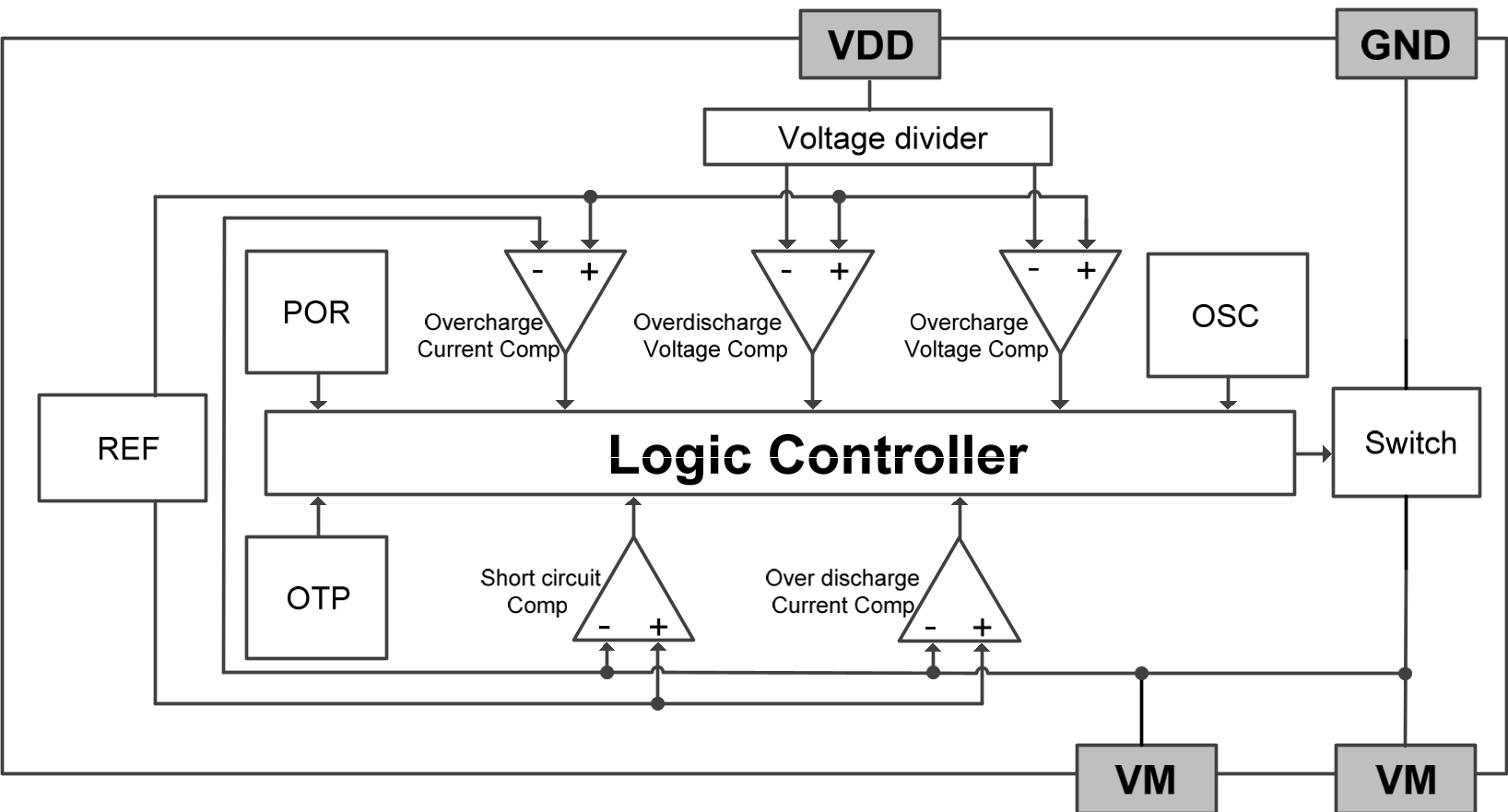 Figure 1: Internal block diagram showing the integration of the comparator and MOSFET drivers.
Detailed Features: Safety Beyond the Basics
- 0V Battery Forbidden Function: A critical safety feature that checks if a cell is internally shorted (<1.15V) before allowing a charge to proceed, preventing thermal runaway.
- Reverse Connection Protection: Protects the circuit even if the charger or the battery cell is connected with reversed polarity.
- Ultra-Low Quiescent Current: In "Power-down Mode," the chip draws only 0.1μA, vital for long-term shelf storage of consumer electronics.
Performance & Validation
The XB5748ISZ11 exhibits tight tolerances essential for high-capacity Li-Po cells. The overcharge detection voltage is fixed at 4.30V ± 50mV, maximizing the cell's energy density while staying within the chemical safety margin.
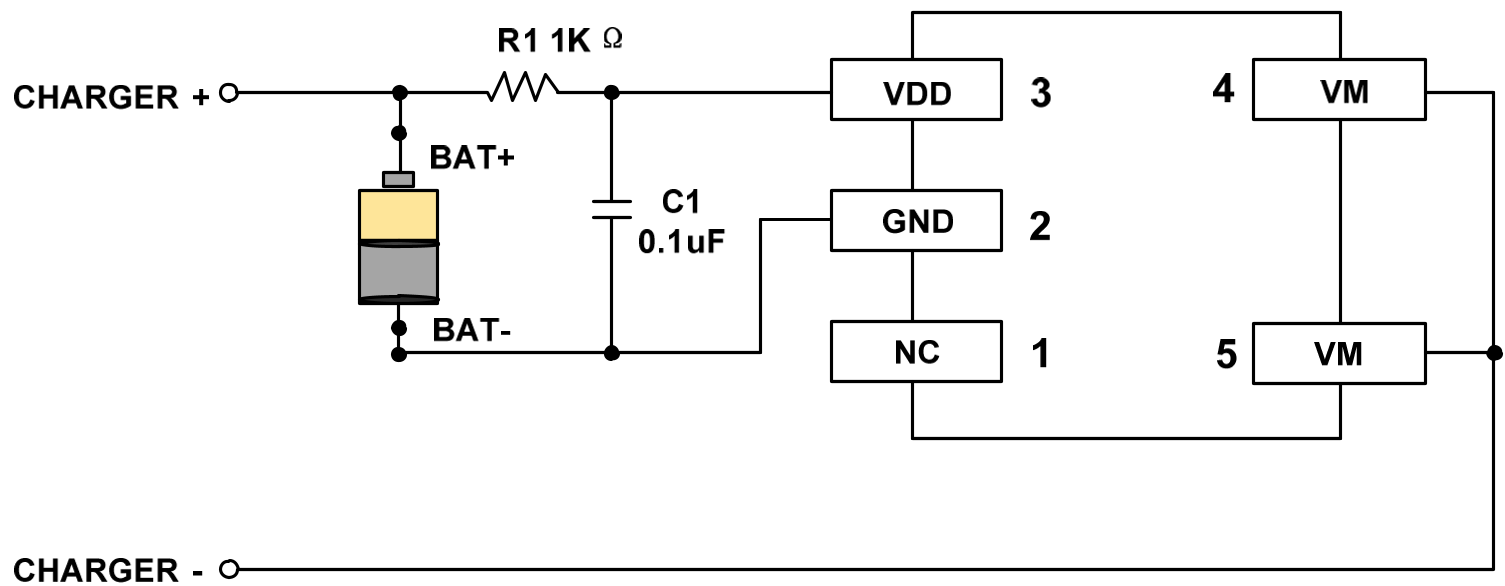 Figure 2: Typical Application Circuit showing the minimal external components (1 Resistor, 1 Capacitor) required.
Timing and Sequence
The timing chart illustrates how the IC handles transient conditions. Specifically, the two-step overcurrent detection distinguishes between a standard over-discharge current and a "Load Short Circuiting" event, which triggers a near-instantaneous (250μs) shutdown.
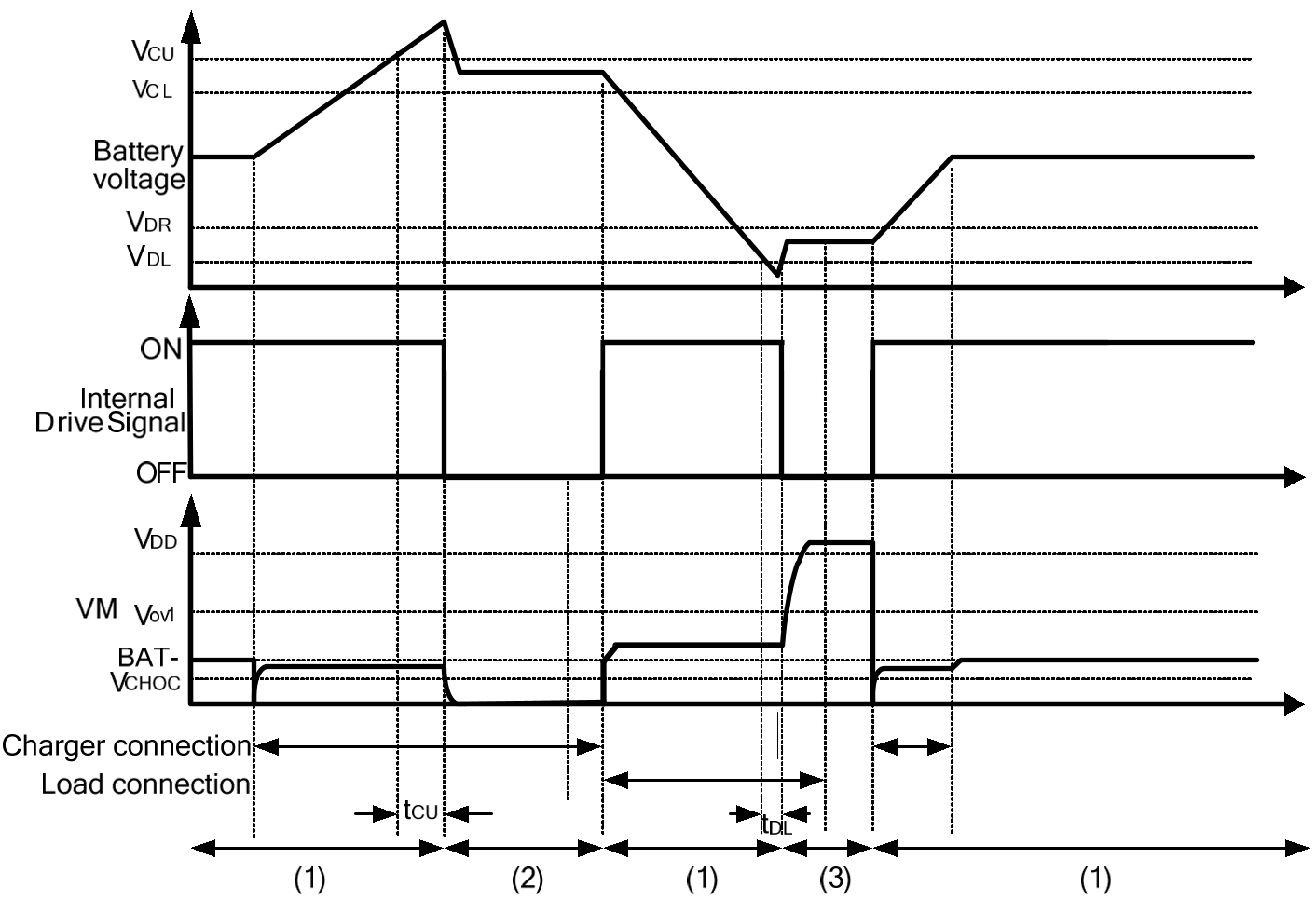 Figure 3: Timing chart for overcharge and over-discharge voltage detection.
Critical Insight & Conclusion
The XB5748ISZ11 is more than just a switch; it is a sophisticated state machine designed to protect the user and the device. By lowering the power consumption during the "Power-down" state to 0.1μA, XySemi has effectively solved the "battery drain" issue for products that sit in retail packaging for months.
Limitations: While suitable for most consumer electronics, the 53mΩ on-resistance might be high for ultra-high-current applications (e.g., power tools), where specialized low-RDS(on) discrete FETs are still preferred.
Future Outlook: We expect to see this level of integration move toward multi-cell protection ICs, further reducing the footprint of e-mobility and robotic battery packs.